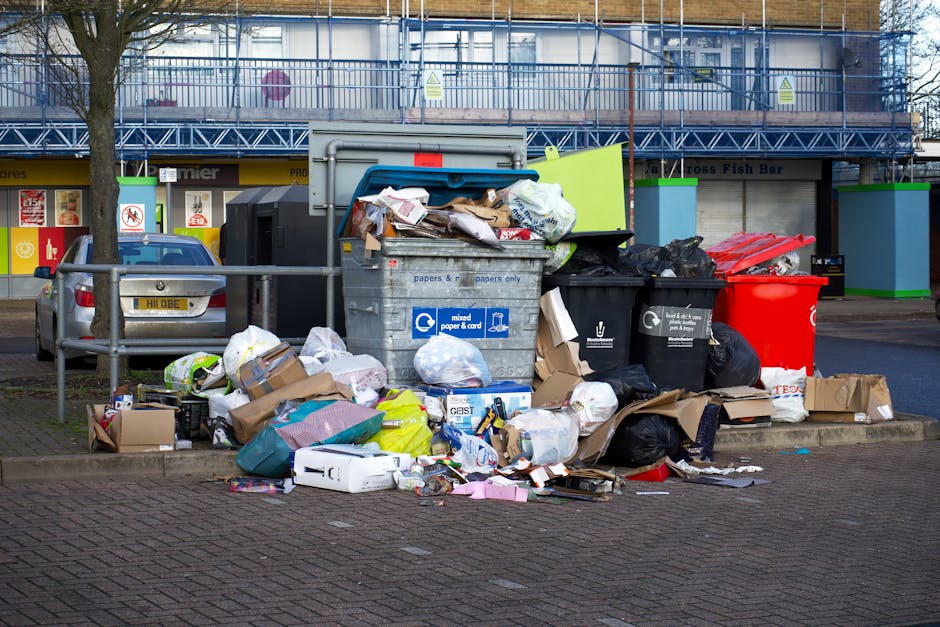
What to know about Chelmsford rubbish removal quotes
If you are trying to clear a house, garage, office, or garden in Chelmsford, the quote is often the first thing people want to understand. Fair enough. But What to know about Chelmsford rubbish removal quotes is about more than just the number at the bottom of the page. It is about what is included, how the price is worked out, what happens on the day, and whether you are comparing like-for-like. Get that wrong and a cheap-looking quote can turn into a messy surprise later. Get it right, and the whole job becomes much simpler.
This guide breaks everything down in plain English: how quotes are built, what changes the price, when a fixed quote is better than an estimate, and how to spot value without overpaying. We will also look at common mistakes, practical checks, and a few real-world scenarios you are very likely to recognise. No fluff. Just the things that actually help.
Table of Contents
- Why quotes matter in the first place
- How rubbish removal quotes work
- Key benefits and practical advantages
- Who this is for and when it makes sense
- Step-by-step guidance
- Expert tips for better results
- Common mistakes to avoid
- Tools, resources and recommendations
- Law, compliance, standards, or best practice
- Options, methods, and comparison
- Case study or real-world example
- Practical checklist
- Conclusion
- Frequently asked questions
Why What to know about Chelmsford rubbish removal quotes Matters
A rubbish removal quote is not just admin. It sets expectations. It tells you whether the provider understands the job, whether the price reflects the actual volume and access, and whether you are likely to face add-ons later. In practice, the quote is where trust begins.
People often call up after a stressful event: a move, a bereavement, a garage that has quietly become a storage unit, or a renovation that has left dust, offcuts, and broken bits everywhere. In those moments, clarity matters more than slogans. You want to know what the job will cost, how quickly it can be done, and what happens if the load is bigger than expected. That is where a proper quote earns its keep.
In Chelmsford, as in most UK towns, rubbish removal jobs vary a lot. A small flat clearance near town can be very different from a loft clearance in a house with tight stairs, or a builders waste job with heavy rubble. The quote should reflect that reality, not hide it. If a provider gives the same vague price to everyone, that is usually a warning sign. Not always, but often enough to be cautious.
Key point: a good quote should help you compare options clearly, not just look cheap at first glance.
If you are planning a larger clearance, it can also help to look at related service pages such as house clearance, home clearance, or garage clearance so you can understand what kind of work the quote may need to cover.
How What to know about Chelmsford rubbish removal quotes Works
Most rubbish removal quotes are based on a mix of volume, weight, labour, access, and disposal type. That sounds technical, but it is usually pretty straightforward once you see how each part affects the total.
1. Volume or load size
The biggest driver is often how much waste there is. Many companies price by how much space your rubbish takes in the vehicle, because that is a practical way to measure a mixed load. A few bags in a corner of the shed is one thing; a full garage and part of a driveway is another. Obvious, yes, but worth stating because people often underestimate the amount sitting around them.
2. Type of waste
Different waste streams can carry different handling or disposal requirements. General household rubbish, furniture, garden waste, soil, plasterboard, and builders waste do not all behave the same. Heavy items can change the economics quickly. For example, a mostly light load of broken chairs and boxes may cost very differently from a pile of bricks or tiles.
If your job is more specialised, the quote may align with a specific service such as builders waste clearance, garden clearance, or furniture disposal.
3. Access and labour
Access can make a surprisingly big difference. Is the waste outside already, or does it need carrying down three flights of stairs? Is parking easy, or will the team need to walk a long way from the vehicle? Are there awkward turns, narrow hallways, or heavy items that need two people to lift safely? These details matter because they affect time and effort.
That is why a good quote should ask sensible questions. A quick photo often helps. It is not about being nosy; it is about avoiding a wrong price and a frustrated customer later.
4. Disposal and recycling costs
Responsible disposal is part of the price. Sorting recyclable material, transporting waste, and using licensed facilities all add to the operating cost. A decent provider should be transparent about this. If recycling and reuse are part of their process, that may support a fair price rather than the cheapest price.
You can also review the company's approach to recycling and sustainability if that matters to you, and for payment confidence see payment and security.
5. Fixed quote or estimate?
This is one of the most important distinctions. A fixed quote is a set price for the agreed job, while an estimate is a best-guess figure that may change if the actual load or access differs. Estimates are not automatically bad. They are useful when the details are unclear. But for peace of mind, a fixed quote is usually better once the scope is confirmed.
Truth be told, people often compare a fixed quote with an estimate and think the estimate is cheaper. It might be. Or it might just be less honest about the final total.
Key Benefits and Practical Advantages
Getting a proper rubbish removal quote gives you more than a price. It gives you control. And when you are dealing with clutter, that is half the battle.
- Budget clarity: you know roughly what you will spend before the team arrives.
- Better comparison: you can compare providers on service, not just price.
- Less stress: there is less room for awkward surprise charges.
- Faster decisions: once the job is clear, booking becomes simple.
- Better planning: useful when you are coordinating a move, sale, renovation, or office refresh.
There is also a time-saving benefit people sometimes overlook. A clear quote can stop endless back-and-forth. No one wants to spend the afternoon sending photos of an old wardrobe, then another photo of the drawers, then the drawers with the doors open. You get the idea. A sensible quote process cuts through that.
For landlords, estate agents, and business owners, this clarity matters even more. If you are dealing with repeat clearances, a provider that quotes well can make your workflow much smoother. That is especially true for office clearance or business waste removal where timing and access are often tight.
Who This Is For and When It Makes Sense
Rubbish removal quotes are useful for a lot of people, not just those with a full house to empty. If you are wondering whether you should bother getting one, the answer is probably yes if the job has more than a bin-bag or two.
Homeowners
Homeowners usually need quotes when they are decluttering, renovating, moving, or clearing out a property after years of accumulated stuff. Loft clearance and garage clearance are classic examples. There is always more up there than you think. Always.
Tenants and landlords
Tenants may need quick removal before the end of a tenancy. Landlords often need reliable pricing after a tenant leaves items behind or when a property needs to be made ready for re-let. Speed and predictability matter here.
Families managing a life event
Sometimes the job is sensitive. A bereavement, downsizing, or helping a relative move can all involve sorting belongings carefully and fairly. In those cases, a quote should feel respectful and flexible, not pushy.
Tradespeople and renovators
Builders, decorators, and renovators often need builders waste clearance for rubble, timber, packaging, and mixed site waste. The quote needs to reflect heavy materials, site access, and any loading time.
Businesses
Offices, shops, and other commercial premises may need a quote for a one-off strip-out or routine clearance. If you are in this group, it is worth checking how the provider handles invoices, timing, and any compliance paperwork.
And yes, if the job is tiny, you may not need a detailed quote at all. But once the pile starts looking like a proper project, it is sensible to ask.
Step-by-Step Guidance
Here is the simplest way to approach Chelmsford rubbish removal quotes without overcomplicating the process.
Step 1: List what needs removing
Walk through the space and be honest about everything included. Broken furniture, old appliances, mattress, garden waste, cardboard, rubble, bags, the lot. Be specific. "A few things" is often how a small quote becomes a larger job.
Step 2: Separate different waste types
Mixing waste types can blur the pricing. A load of furniture is not the same as a load of soil. If you have a combination, say so. It helps the provider estimate fairly and may even help you spot a better way to split the job.
Step 3: Check access details
Tell the company whether the waste is upstairs, in a loft, behind a locked gate, or at the end of a long drive. Mention parking restrictions if they matter. These details are boring, but they matter. A lot.
Step 4: Ask what is included
Does the quote include labour, loading, disposal, and VAT if applicable? Are there extra charges for difficult access, very heavy items, or extra volume? Do not be shy here. A serious provider will expect the question.
Step 5: Ask for the pricing basis
Ask whether the price is fixed or estimated. If it is an estimate, ask what might change it. If it is fixed, ask what assumptions it is based on. That gives you a fairer comparison between quotes.
Step 6: Compare service as well as price
Look at professionalism, response time, clarity, and whether the provider sounds organised. A slightly higher quote can be worth it if the company is reliable and clear. The cheapest option can turn into a headache, and nobody needs that on a Tuesday morning with bags piled by the door.
Step 7: Confirm the booking details
Before you agree, make sure you have the date, time window, expected load, payment terms, and any special instructions written down or clearly confirmed. A minute of checking can prevent a lot of backtracking later.
Expert Tips for Better Results
After enough quote conversations, a few patterns become obvious. The people who get the best results are usually the ones who prepare a little, but not obsessively.
- Take photos in daylight. It is much easier to judge volume when the room is properly lit. Evening kitchen photos can make half a sofa look like a mountain.
- Include the awkward bits. If there is a heavy wardrobe, a dismantled bed, or a pile in the loft, say so upfront.
- Be realistic about volume. If you think a load is "about half a van", check whether that is your guess or an actual description from the provider.
- Ask about recycling or reuse. It can influence both the process and how responsible the clearance feels.
- Book a little breathing room. If you are moving house or handing back keys, avoid leaving clearance to the last hour. That is stress you do not need.
One more thing: if you have a very mixed job, you may get a more accurate quote by splitting it into sections. For example, furniture one day, garden waste another. Not always necessary, but sometimes it helps.
Common Mistakes to Avoid
The biggest mistakes are usually not dramatic. They are small oversights that quietly change the outcome.
Choosing only on headline price
A cheap number is tempting, especially when the room looks like a jumble sale in reverse. But if the quote is vague, it may not include all the work. Compare scope, not just cost.
Understating the amount of waste
People regularly underestimate by a fair margin. That is normal. We all do it. But if you leave out half the items, the quote will not match the job.
Ignoring access problems
Stairs, parking, distance from the vehicle, and narrow hallways all affect the job. Leave them out and the quote may need revising on arrival.
Not asking about extras
Some items may carry extra handling or disposal considerations. It is better to ask before the booking than argue over it after the van is loaded.
Assuming every provider works the same way
Some companies specialise in domestic work, others in commercial or trade waste. A provider that excels at flat clearance may not be the best fit for a heavy builders load, and vice versa.
One slightly annoying but true fact: the quote process is often where the quality of the company shows up. If they are organised there, they are often organised on the day too.
Tools, Resources and Recommendations
You do not need fancy tools to get a good quote. Just a bit of organisation and a sensible approach.
Useful things to have ready
- clear photos of the waste from different angles
- a rough list of item types
- details about stairs, parking, gates, and access
- your preferred timing or deadline
- any special concerns, such as fragile flooring or shared entrances
Helpful internal pages to review
If you are comparing a quote against a specific job type, it can help to look at the relevant service information first. For example, furniture clearance is useful if most of the load is bulky household items, while loft clearance is better reading if the challenge is access and stairs. For outside spaces, garden clearance may be the closest match.
For broader information on how pricing is approached, pricing and quotes is a sensible page to review. If you want to know more about the business itself, about us is worth a look too. Trust does matter here, let's be honest.
Small recommendation that saves time
Keep your photos in one folder on your phone before you call. It sounds trivial, but it makes the process much smoother. No hunting through old screenshots while someone is waiting on the line.
Law, Compliance, Standards, or Best Practice
Rubbish removal touches on disposal responsibility, transport, and safety, so a careful provider should work in line with normal UK waste-handling best practice. You do not need to be a compliance expert yourself, but you do need to know what to ask about.
At a practical level, a reputable company should be able to explain how your waste will be handled, whether it is being reused, recycled, or disposed of properly, and what kind of items they can or cannot accept. They should also be clear about safety when moving bulky or heavy items, especially in tight homes, stairwells, or shared spaces.
If you have concerns about how the work is carried out, look at related policies such as health and safety policy, insurance and safety, and terms and conditions. Those pages can give you a better sense of how the company approaches risk and customer expectations.
For commercial clients, it is sensible to ask for clear documentation where needed, and to confirm how access, lifting, and loading will be managed on-site. For domestic customers, the same principle applies, just in a less formal way. You are checking for professionalism, basically.
If the provider talks openly about responsible handling and has straightforward policies, that is usually a good sign. If they dodge basic questions, that is less reassuring. Simple as that.
Options, Methods, and Comparison Table
There are a few ways people approach rubbish removal pricing. Some work better than others depending on the size and shape of the job.
| Approach | Best for | Pros | Watch out for |
|---|---|---|---|
| Quick phone estimate | Small, straightforward jobs | Fast and convenient | Can be vague if the load is hard to judge |
| Photo-based quote | Most domestic clearances | More accurate than guesswork | Needs good photos and honest detail |
| On-site assessment | Large, awkward, or mixed jobs | Best for accuracy | Takes more time to arrange |
| Fixed quote after details confirmed | Jobs with clear scope | Best certainty for budgeting | Depends on accurate information from you |
In real life, the best choice usually depends on how clear the job is. If the waste is neatly stacked and easy to describe, a photo-based or fixed quote can work very well. If the job involves hidden loft contents, heavy materials, or uncertain access, an on-site check can prevent later disagreement.
There is no single perfect method. There is just the right method for the job you actually have.
Case Study or Real-World Example
Imagine a Chelmsford homeowner getting ready to sell a property. The upstairs rooms are mostly tidy, but the garage is packed with old shelving, a broken freezer, boxes of mixed junk, and a couple of items from a previous move that were never unpacked. The first instinct is to ask for "a quote for the garage." Fair enough. But that is still a bit broad.
Once they take a few daylight photos, list the larger items, and mention that the garage sits at the end of a short driveway, the quote becomes much more accurate. The provider can see that the main work is a mix of bulky but manageable items, with easy access and a straightforward loading route. The result is a better price, fewer surprises, and a job that is done in one visit.
Now compare that with a second job: a top-floor flat where the customer says there is "just a little bit of waste." Once the photos arrive, it turns out to include several dismantled wardrobes, a mattress, a couple of heavy drawers, bags of clothes, and some miscellaneous bits in a storage cupboard. Not outrageous, but not "little" either. This is where the quote process saves everybody trouble. The provider can adjust for stairs and labour, and the customer knows what they are paying for.
That is the real value of a proper quote. It turns uncertainty into a plan. Quietly, neatly, without fuss.
Practical Checklist
Use this before you accept any rubbish removal quote in Chelmsford.
- Have you listed all the items that need removing?
- Have you included awkward access points, stairs, or parking issues?
- Do you know whether the price is fixed or estimated?
- Have you asked what is included in the quote?
- Have you checked whether the waste type affects the price?
- Have you compared at least two options, if time allows?
- Have you confirmed the booking date and time window?
- Have you asked about recycling, reuse, or disposal handling?
- Have you read the relevant service and policy pages if needed?
- Do you feel comfortable with the clarity of the provider's answers?
If that list feels a bit much, do not worry. Most of it can be covered in one short conversation and a couple of photos. It is not meant to be hard.
Conclusion
Knowing what to look for in Chelmsford rubbish removal quotes makes the whole process calmer, clearer, and usually better value. The main thing is to compare the full picture: what the quote includes, how it is calculated, whether access has been considered, and how responsibly the waste will be handled.
Once you stop treating the quote as just a price and start seeing it as a service brief, everything becomes easier. You get fewer surprises, better planning, and a provider who understands the job properly. That is the goal, really.
If you are at the stage where the clutter is already staring back at you from the hallway, the loft, or the garden shed, the next sensible move is simple.
Get a free quote today and see how much you can save.
And if you want to learn more about the company, its approach, or how specific jobs are handled, you can also explore the relevant service pages and policies linked above. Small step, but a useful one. Sometimes that is all it takes to get the place feeling lighter again.
Frequently Asked Questions
What should a Chelmsford rubbish removal quote include?
A proper quote should usually cover labour, loading, disposal, and any important assumptions about access or waste type. If something is not clear, ask before booking.
Is a fixed quote better than an estimate?
Usually, yes, once the job is clearly described. A fixed quote gives more certainty. An estimate can still be useful for rough planning, but it may change if the actual job is different.
Why do rubbish removal prices vary so much?
Because every job is different. Volume, waste type, access, lifting effort, and disposal requirements can all change the price. Two jobs that look similar at a glance may be quite different in practice.
Can I get a quote from photos?
Yes, often you can. Photos taken in good light from a few angles usually give a fair picture of the load. Mention anything hidden, awkward, or heavy so the quote is more accurate.
Do I need to separate rubbish before asking for a quote?
No, not necessarily. But if you can separate obvious categories like furniture, garden waste, and builders waste, it can help make the quote clearer and more precise.
What if the job turns out bigger on the day?
A responsible provider should explain how any difference will be handled before work continues. That is why it is so important to be as accurate as you can at the quote stage.
Are very cheap quotes a bad sign?
Not always, but they deserve a closer look. Check what is included and whether the quote is based on realistic assumptions. Cheap is fine if it is honest. Cheap and vague is less helpful.
How do access issues affect the quote?
Stairs, parking distance, narrow entrances, and awkward lifts all increase time and effort. If the team has to carry items a long way or work carefully around tight spaces, that may be reflected in the price.
Should I mention recycling or reuse preferences?
Yes, if that matters to you. It is sensible to ask how the provider handles recyclable items, reusable furniture, and general disposal. It helps you choose a company that matches your priorities.
Is it worth comparing more than one quote?
Yes, especially for larger jobs. Two or three quotes can help you understand what is normal and spot unusually low or unclear pricing. You do not need to turn it into a spreadsheet saga, though.
What should I do before confirming a quote?
Make sure the scope, price basis, date, access details, and any exceptions are clear. If everything still feels straightforward after that, you are probably in a good place.
Where can I learn more about related clearance services?
You can review pages such as waste removal, house clearance, and furniture clearance for more context on the types of work that often sit behind a quote.