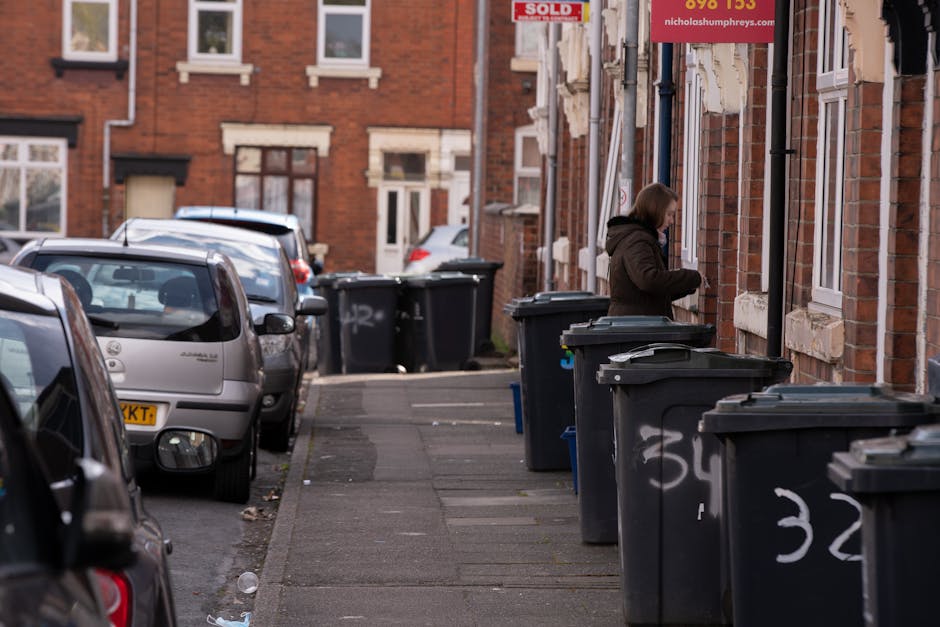
Narrow street rubbish challenges Chelmsford insider tips
Narrow streets can turn a simple rubbish clear-out into a bit of a puzzle. If you live, work, or manage a property in Chelmsford, you will know the feeling: tight parking, awkward turning space, residents' cars everywhere, and nowhere obvious to set a bin bag down without blocking someone's gate. This guide to Narrow street rubbish challenges Chelmsford insider tips is here to make that job easier. It explains what makes these streets tricky, how to plan around the bottlenecks, and which small decisions save time, effort, and a fair amount of stress.
We will also cover practical methods, safety considerations, and a few local-minded shortcuts that experienced teams tend to use quietly in the background. Nothing fancy. Just the kind of advice that helps a rubbish collection feel organised instead of chaotic.
Table of Contents
- Why Narrow street rubbish challenges Chelmsford insider tips Matters
- How Narrow street rubbish challenges Chelmsford insider tips Works
- Key Benefits and Practical Advantages
- Who This Is For and When It Makes Sense
- Step-by-Step Guidance
- Expert Tips for Better Results
- Common Mistakes to Avoid
- Tools, Resources and Recommendations
- Law, Compliance, Standards, or Best Practice
- Options, Methods, or Comparison Table
- Case Study or Real-World Example
- Practical Checklist
- Conclusion
- Frequently Asked Questions
Why Narrow street rubbish challenges Chelmsford insider tips Matters
Narrow streets create a very specific kind of rubbish removal problem. It is not just about lifting waste and moving it out. It is about access, timing, neighbour relations, vehicle choice, and how quickly a team can load without causing a scene. On a quiet road, a clearance can feel almost invisible. On a tight Chelmsford street, every wheelie bin, parked car, and doorway matters.
That matters for a few reasons. First, delays often snowball. If a vehicle cannot stop close enough, items may need to be carried further, which takes longer and increases the risk of damage or strain. Second, access problems can affect what can be removed on the day. A wardrobe might look manageable until you realise the hallway bends sharply and the van is half a street away. Third, narrow streets often mean more interaction with neighbours, so a calm and tidy approach is worth its weight in gold.
In our experience, the biggest challenge is rarely the rubbish itself. It is the logistics around it. The bags are the easy part. The door frames, reverse manoeuvres, and awkward parking are where the job gets interesting. Or, to be fair, where it gets a little annoying.
For larger or more mixed clearances, it can help to think beyond "rubbish removal" and look at the actual type of load. A flat clear-out, for example, brings different access issues from a garage tidy-up or a furniture disposal job. If you are comparing services, pages like flat clearance, furniture disposal, and garage clearance can give you a sense of how different jobs are usually handled.
How Narrow street rubbish challenges Chelmsford insider tips Works
The practical side of narrow street rubbish removal usually follows the same pattern, even if each property feels slightly different. The work begins before anything is lifted. A good team or homeowner looks at access, identifies the nearest safe stopping point, checks whether items need to be broken down, and decides how to move waste with the fewest trips.
Here is the simple logic: the tighter the street, the more important the route from property to vehicle becomes. A driveway may be missing. The pavement may be narrow. The vehicle may need to stop a short distance away. So the work needs to be planned like a small route map, not a random drag-and-drop exercise. That sounds obvious, but people overlook it all the time.
There is also a difference between loading and clearing. Loading means physically moving waste into a vehicle. Clearing means assessing what is there, sorting reusable items from waste, handling bulky objects, and keeping the exit path open. In narrow streets, those are not the same thing. Not even close.
For some jobs, a broader service is the sensible route. If the items are mixed, bulky, and not suited to a quick bin run, a general waste removal approach may be more efficient than trying to force everything into a one-size-fits-all plan. For properties with multiple rooms, attics, or outbuildings, something like home clearance or house clearance may be a better fit.
Key Benefits and Practical Advantages
There is a reason people look for insider tips on this subject rather than just "booking the first available clearance." Narrow-street jobs reward good planning. When the access problem is handled well, the whole process becomes faster, less disruptive, and a lot less stressful.
- Less disruption to neighbours: Good timing and tidy loading reduce blocked driveways, awkward exchanges, and complaints.
- Lower risk of damage: Shorter carry distances and better route planning protect walls, gates, stair rails, and floor coverings.
- Better use of labour: When the team knows where to park and how to move items, fewer trips are wasted.
- Cleaner end result: A proper plan helps leave the property and street looking neat, not like a hurried Sunday morning scramble.
- Safer handling: Bulky or heavy items can be shifted with fewer awkward turns and fewer near-misses.
There is also a quiet commercial benefit. If you are managing a rental property, an office unit, or a shop in a tight side street, a smooth waste removal job reflects well on you. It shows that things are being handled properly. No faff, no mess, no mystery pile of broken chairs lingering for a week.
For businesses, especially those with regular refuse or mixed waste streams, a structured business waste removal arrangement can be more practical than calling for ad hoc help every time the bins overflow. It is not glamorous, but it works.
Who This Is For and When It Makes Sense
This kind of advice is useful for quite a few people. You may be a homeowner trying to get rid of old furniture in a road where parking is already a daily battle. You may be a landlord preparing a flat between tenancies. You may be a business owner on a narrow Chelmsford street where delivery vans, customers, and clearance vehicles all want the same patch of kerb. You may even be dealing with a loft, garage, or garden that has quietly filled up over the years.
It makes sense whenever access is likely to be awkward. A few common examples:
- Terraced houses with limited frontage
- Converted flats with shared entrances
- Older streets with tight bends or low visibility
- Premises with no rear access
- Roads where parking pressure changes through the day
- Properties with bulky items that need dismantling before removal
If your job involves bigger, heavier, or more awkward items, you may need more than a man-and-van approach. Items from a furniture clearance can be deceptively awkward in narrow hallways, especially wardrobes, beds, and sofa frames. Garden waste can be just as cumbersome if it has been bagged in a hurry and left in a cramped passage. It all adds up.
Truth be told, if you are already looking at a stressful week, the last thing you need is a clearance that turns into a parking argument. Best to plan it properly.
Step-by-Step Guidance
Here is a straightforward way to approach narrow street rubbish removal without making it harder than it needs to be.
- Walk the route first. Start at the front door or waste point and follow the exact path to the vehicle position. Watch for tight turns, steps, low branches, and anything that can catch on corners.
- Identify the safest stopping point. This is not always the closest point. Sometimes a spot 20 metres further away is easier, safer, and quicker overall because the vehicle can be loaded without awkward reversing.
- Sort items before moving them. Separate recyclable material, reusable furniture, general waste, and anything that may need special handling. It saves time later.
- Break down bulky items where possible. Flat-pack furniture, detach legs, remove cushions, and fold down anything that can safely be reduced in size. A mattress in a tight stairwell is one thing; a stripped frame is another.
- Protect the route. Use covers or pads where corners, bannisters, or door frames are likely to take a knock. Even a bit of cardboard can help in a pinch.
- Load in a sensible order. Put lighter, more fragile items first if they need protection, then heavier items, then loose waste that can fill the gaps.
- Do a final sweep. Check the pavement, hallway, and any loading area for screws, splinters, bag tears, or small debris. Tiny stuff is what people notice later.
If the route is especially tight, you may be better served by a smaller vehicle or a phased collection. That is one of those details people do not think about until they have a van stuck in second gear and three neighbours watching from the windows. Not ideal.
Expert Tips for Better Results
The best insider tips are usually the least dramatic. Small things done properly. That is the whole game, really.
1. Time the job around street activity. School runs, bin day, commuter parking, and delivery windows can change everything. A quiet mid-morning slot is often easier than an early evening rush. Of course, every street has its own rhythm.
2. Reduce the number of hand movements. Each item should be touched as few times as possible. Move it once, load it once, and be done. In tight spaces, double handling slows everything down and increases the chance of scuffs.
3. Be honest about weight and awkward shapes. A bulky chest of drawers is more troublesome than a heavier item with good handles. Shape matters more than people think.
4. Keep neighbours in the loop if needed. A simple heads-up can prevent misunderstandings. It does not need to be a big announcement. Just enough to say there may be some short-term access noise.
5. Photograph the load before it leaves if the job is complex. This is useful for tracking what was removed and making sure the scope is clear. It is a small habit that helps avoid confusion later.
6. Make recycling part of the plan, not an afterthought. A clear separation of reusable items and recyclable materials is better for the environment and often makes the work feel more organised. If sustainability matters to you, the page on recycling and sustainability is worth a look.
7. Ask about access before asking about price. That one is big. A quick quote is only useful if it reflects the reality of the street. Narrow access, stair carries, and parking constraints all affect the job shape.
Expert summary: In narrow Chelmsford streets, the winning formula is usually simple: clear the route, keep the load compact, choose the right vehicle, and avoid unnecessary handling. The job feels easier because it is easier.
Common Mistakes to Avoid
People often make the same few mistakes when dealing with rubbish in tight streets. They are understandable mistakes. Still mistakes.
- Assuming the closest van space will work. It often does not. Turning room matters as much as distance.
- Leaving bulky items intact. A little dismantling before collection can save a surprising amount of effort.
- Not checking stair width or doorway clearance. A sofa that looks manageable in the room can become a real headache at the bend.
- Forgetting about neighbours' access needs. Blocking a gate or driveway even for a short time can cause friction.
- Mixing everything together. Good sorting saves time and makes disposal more straightforward.
- Booking the wrong type of service. A basic collection may not suit a full property clear-out, especially where access is tight.
One of the less obvious mistakes is trying to work too quickly. Narrow street jobs reward patience, oddly enough. A small pause to reposition a trolley or re-open a doorway can prevent a much bigger problem. It sounds like common sense because it is, but people still rush.
If you are dealing with renovation leftovers as well as household waste, it may be better to use a dedicated builders waste clearance approach rather than mixing rubble, packaging, timber, and furniture all in one go. The same applies when an office is being emptied and access is tight; an office clearance plan can be much easier to manage than trying to improvise on the day.
Tools, Resources and Recommendations
You do not need a warehouse of equipment to manage a narrow street clearance well. A handful of practical tools usually makes all the difference.
- Dolly or sack truck: Useful for boxed waste, small appliances, and stacked items.
- Protective blankets or pads: Handy for hallways, bannisters, and door corners.
- Heavy-duty sacks: Better for loose waste that would otherwise split on the walk out.
- Gloves and sturdy footwear: Basic, yes, but worth saying. Slippery soles and odd-shaped waste are a poor mix.
- Torches or headlamps: Useful for lofts, dim hallways, and early starts in winter.
- Basic tools for dismantling: Screwdrivers, an adjustable spanner, or a small drill can turn an awkward item into a manageable one.
For larger household projects, think about which clearance category best matches the job. A mixed attic job might be better suited to loft clearance. A cluttered side return or overgrown boundary may need garden clearance. A property packed room to room may call for home clearance. Matching the method to the mess is half the battle.
And if you want to understand how a professional team presents itself and works, the about us page can be useful for getting a feel for their approach. For practical next steps, pricing and quotes is often the place people check once they know what sort of job they are dealing with.
Law, Compliance, Standards, or Best Practice
When rubbish is being collected from a narrow street, the legal and practical side matters. You do not need to become a transport planner to handle it, but you should avoid casual shortcuts. Waste should be dealt with responsibly, the vehicle must be parked safely and legally, and the removal process should not create hazards for pedestrians or neighbours.
Good practice in the UK generally means keeping walkways clear wherever possible, avoiding unsafe lifting, not obstructing access unnecessarily, and separating waste types where practical. If a job creates dust, splinters, broken glass, or sharp edges, the handling needs to reflect that. Common sense again, though common sense is sometimes in short supply when people are in a rush.
For businesses, the expectations are even firmer. Waste should be handled in a way that is traceable, safe, and consistent with the nature of the material. If you are running a shop, office, or small commercial site on a tight Chelmsford street, a planned collection is usually safer than a reactive one. The page on business waste removal can help you think through the right setup.
Safety matters too. A sensible provider should work with proper care around lifting, access, and load handling. Pages such as health and safety policy and insurance and safety are useful trust signals because they show the operator takes the work seriously. That is not window dressing; it is what you want to see before someone starts moving a heavy wardrobe down a stairwell.
If you are arranging a collection, it is also wise to understand the service terms, how payment is handled, and how your personal information is used. The pages on terms and conditions, payment and security, and privacy policy are sensible places to check. Small detail, yes, but it avoids awkward surprises.
Options, Methods, or Comparison Table
Not every narrow street rubbish job should be handled the same way. The right method depends on what you are clearing, how much there is, and how awkward the access feels in real life.
| Method | Best for | Pros | Trade-offs |
|---|---|---|---|
| Manual carry-out | Small loads, bagged waste, lightweight items | Simple, flexible, no special equipment needed | Can be slow and tiring over longer distances |
| Trolley or sack truck | Boxed items, stacked waste, medium loads | Speeds up repeated trips, reduces strain | Needs a clear route and enough turning space |
| Partial dismantling | Bulky furniture, awkward shapes, stairwells | Makes items easier to move through tight spaces | Takes time and a few tools |
| Smaller vehicle access | Very tight streets, limited stopping space | Easier to position, less disruption | May require more trips if the load is large |
| Full clearance plan | Whole-property or mixed waste jobs | Best for complex access and larger volumes | Needs more planning up front |
For many Chelmsford properties, the best option is a hybrid approach. A few items are dismantled, loose waste is bagged, and the vehicle is parked where the route is cleanest, not where it looks closest on paper. That sort of practical compromise tends to win.
Case Study or Real-World Example
Picture a typical terraced property on a narrow residential road. The owner has a broken wardrobe, three sacks of loft clutter, an old desk, and some mixed bagged rubbish from a kitchen clear-out. The street is busy by school-run time, there is no driveway, and neighbours are already using the kerbside spaces.
A rushed approach would be to send a van, hope for the best, and start carrying items from wherever the driver can stop. That usually leads to extra trips, blocked access, and a bit of frustration all round. The smarter approach is different.
First, the route from front door to the road is checked carefully. The wardrobe is dismantled before moving. The sacks are double-checked for sharp edges and weight balance. A stopping point is chosen just far enough from the pinch point to avoid blocking the bend. The heaviest items are loaded first, then the loose waste, then the lighter pieces that fill the gaps. A final sweep clears stray screws and packaging from the pavement. Done properly, the job feels almost boring. And boring is good here.
That is the real insider lesson: most narrow-street rubbish challenges are solved by removing friction. Fewer decisions on the day. Fewer surprises. Fewer carry-backs. It sounds almost too simple, but it works.
Practical Checklist
Use this checklist before a narrow street clearance in Chelmsford:
- Walk the full route from property to collection point
- Measure or visually check doorways, hallways, and stairs
- Decide whether bulky items should be dismantled
- Separate recyclable, reusable, and general waste where possible
- Choose the safest legal stopping point, not just the nearest one
- Warn neighbours if access may be temporarily affected
- Protect walls, corners, floors, and bannisters
- Have sacks, gloves, and basic tools ready before starting
- Plan for sharp objects, dust, and awkward lifting
- Do a final sweep for debris, fixings, and packaging
If you want the job to feel smoother from the outset, it is also worth checking the provider's background and service pages before you commit. The right information upfront saves a lot of back-and-forth later.
Get a free quote today and see how much you can save.
Conclusion
Narrow street rubbish work in Chelmsford is rarely difficult because of the waste alone. It is difficult because access changes everything. Once you understand that, the rest becomes easier to manage. Measure the route. Reduce the bulk. Choose the right method. Keep the street clear. That is the core of it.
The best insider tips are not flashy. They are steady, practical, and based on what actually makes the job simpler on the day. If you use this approach, you will avoid most of the usual hassle and finish with a cleaner space and a calmer head. Which, let's face it, is what most people really want.
And if the job still feels a bit too much, that is perfectly normal. Tight streets make ordinary tasks feel bigger than they are. Take it one step at a time, and you will get there.
Frequently Asked Questions
What makes narrow street rubbish removal in Chelmsford so difficult?
The main challenge is access. Limited parking, tight turns, shared pavements, and nearby front doors all make loading slower and more awkward. The waste itself is often not the hard part.
How do you plan a rubbish clearance in a narrow street?
Start by walking the route from the property to the vehicle position. Check for stair width, doorway clearance, turning space, and places where a van can stop without blocking access.
Is it better to dismantle furniture before collection?
Usually, yes. Dismantling bulky furniture can make it much easier to move through tight hallways and doorways. It also reduces the chance of damage on the way out.
Can rubbish be collected if there is no driveway?
Yes, but the job needs more careful planning. A safe kerbside position may be enough, provided the route is clear and the collection can be completed without causing obstruction.
What items are hardest to remove from narrow streets?
Large sofas, wardrobes, desks, mattresses, and mixed bags of heavy waste tend to be the most awkward. Shape and weight matter more than people expect.
How can I make a narrow street clearance quicker?
Sort waste first, dismantle bulky items, clear the access route, and have everything ready before the vehicle arrives. Each of those steps cuts down wasted time.
Do I need to tell neighbours before a rubbish collection?
Not always, but it is often a good idea if access may be temporarily affected. A short heads-up helps avoid complaints and keeps things civil.
What should I do with mixed household and garden waste?
Separate it if possible. Mixed waste can be more awkward to handle and may need a broader clearance plan, especially if there are bulky or dirty items involved.
How do businesses handle waste in narrow Chelmsford streets?
Businesses usually benefit from a planned collection rather than a reactive one. Regularity, safety, and access planning are especially important where kerb space is limited.
Are narrow street rubbish jobs more expensive?
They can be, depending on access, the amount of labour involved, and whether items need dismantling or extra carrying. A clear quote should reflect the actual conditions, not just the volume.
What safety checks should I do before moving waste out?
Check for trip hazards, sharp edges, slippery surfaces, and unstable piles. Make sure there is enough room to turn safely and that the route stays clear during the move.
When should I choose a full clearance service instead of a simple collection?
If the property has multiple rooms, a loft, a garage, or mixed bulky waste, a full clearance service is usually more practical. It handles complexity better and reduces stop-start chaos.
If you are still weighing things up, the simplest next step is to compare the type of waste, the access issues, and the level of help you need. A little planning now saves a lot of lifting later. And honestly, that is a relief in itself.